


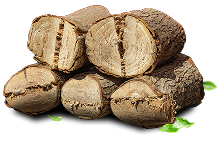


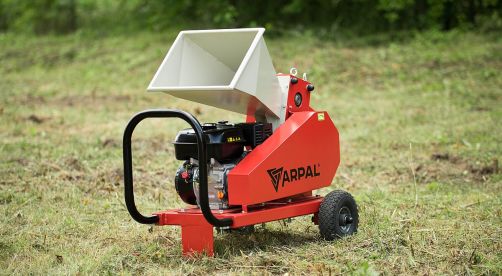
Seasonal pruning of the garden in spring and fall is an absolutely necessary operation for the care of a garden and household plot. Every time after pruning, a large amount of wood waste remains, and the question arises — where to dispose of branches after pruning? There are three common and affordable solutions.
Burn the branches on the garden plot
Take the branches to a landfill by truck
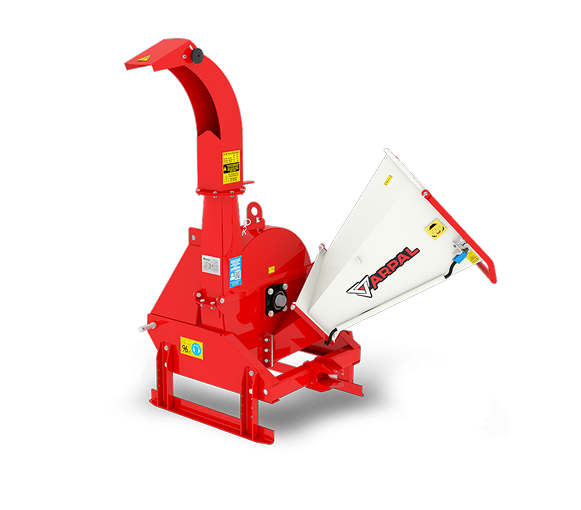
Process the waste with a branch shredder
Let’s consider each of these options in more detail and highlight their advantages and disadvantages. Burning branches is the simplest method but also the most dangerous. In addition to fire hazards, burning may harm your family’s health and spoil relationships with neighbors. It may also lead to fines.
Removing branches to a landfill may seem more acceptable, but branches after pruning occupy a significant volume, so transportation can be expensive. Considering these factors, purchasing a branch shredder and recycling wood waste on-site becomes the most practical solution.
In addition to solving the disposal problem, the resulting material can be used as fertilizer for the garden or for other useful purposes. But how do you choose a branch shredder for home use? In this article we will try to understand the key factors and find the answer.
What Are Garden Shredders Used For?
When choosing a branch shredder, users typically have specific tasks for the equipment. Depending on the type of machine, a shredder may be used for removing garden branches, processing them into mulch or fertilizer, or preparing material for heating.
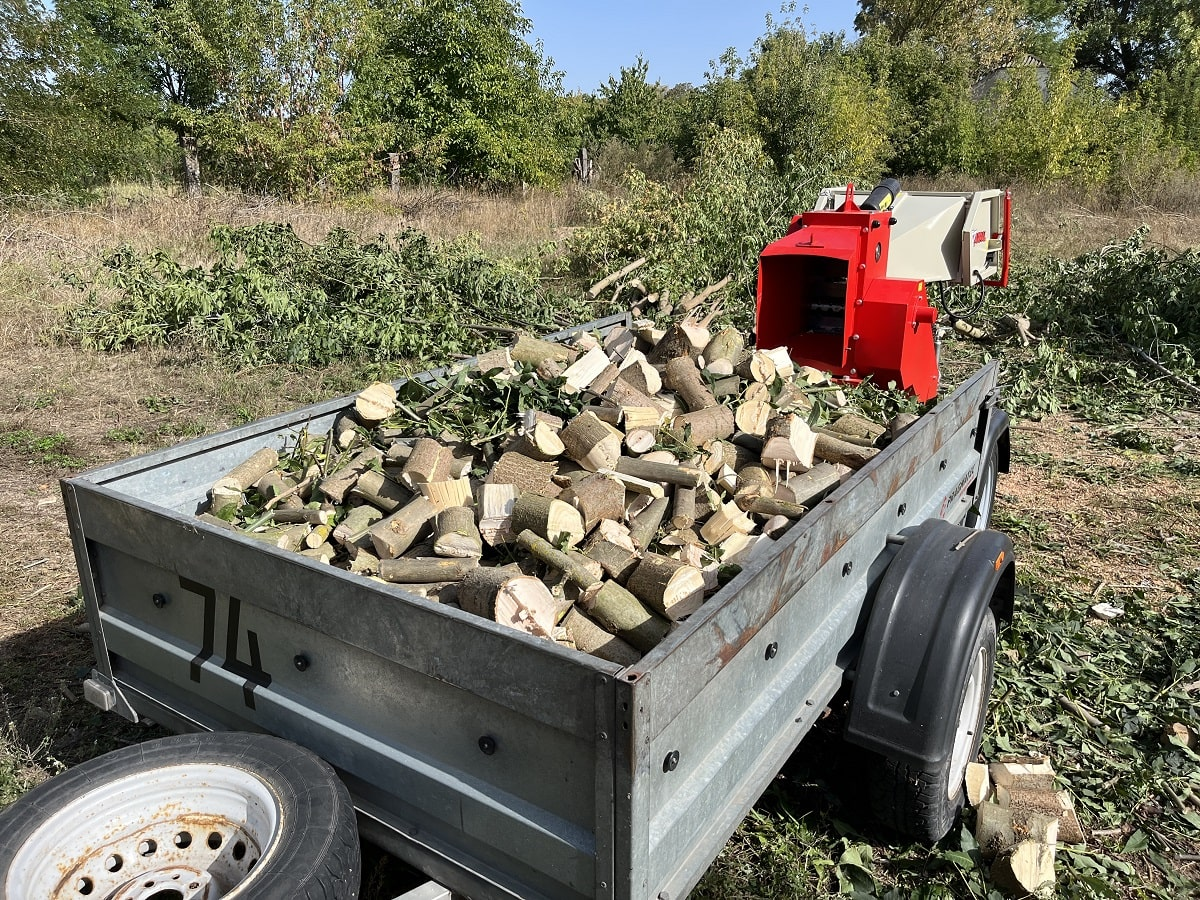
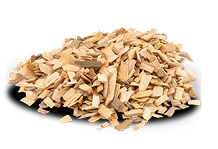
If the machine produces wood chips, the processed material can be used for mulching and fertilizing the garden. If it is a wood chopper that cuts branches into pieces, the resulting material can be used as fuel for solid-fuel boilers, stoves, and fireplaces. The chopped wood can also be used in grills, barbecues, and smokehouses.
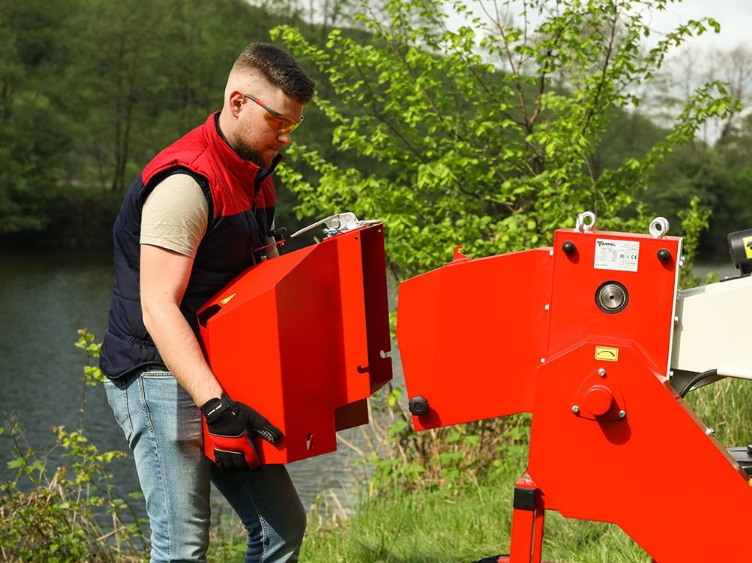
Device and Principle of Operation
Branch shredders can be divided into two main categories:
- Chip shredders (grass and twig shredders)
- Wood choppers that cut branches into firewood pieces
The chip shredder may have several design variations. One option is a drum-type shredder where knives are mounted on a rotating drum. Another option is a disk-type shredder where knives are mounted on a rotating disk.
There are also combined designs where disk shredders include additional hammers in the cutting chamber. These hammers further grind the branches already cut by the disk or process garden waste fed through a separate hopper.
A wood chopper that cuts branches into pieces typically uses three shafts: one drive shaft and two working shafts. Each working shaft has three knives. When two knives move toward each other, they cut off a portion of the branch.
Main Characteristics and Capabilities
The main characteristics of household and industrial branch shredders include the following parameters:
- Weight and dimensions
- Maximum branch diameter
- Output fraction size of chips or firewood
- Type of drive
- Fuel consumption
The design and operating principle determine the capabilities of the equipment. Machines should be selected according to the type of work required.
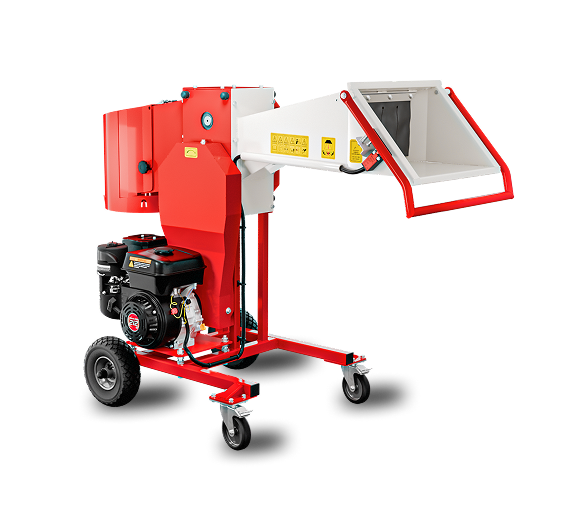
For example, for maintaining a household plot, greenhouse, or small garden, a combined shredder with a disk and hammer system in one housing is convenient. Such machines can process both pruning branches and other organic waste such as grass, leaves, crop residues, and bark.
For industrial use, disk-type chippers such as MK-170BD or MK-170TR are recommended. These machines are designed for professional and daily operation and include features that allow them to handle heavy workloads.
Examples include special knife designs, hydraulic feeding systems, anti-stress feeding control, and a 360-degree rotating discharge chute.
For producing firewood fuel, a branch chopper that cuts branches into pieces is often the best solution. The resulting fraction is suitable for heating purposes, while the machine remains simple to maintain and provides long knife service life.
Engine Types
Shredders may operate using a tractor PTO drive or gasoline engines with power ranging from 7 to 35 hp depending on the equipment model.
ARPAL branch choppers use engines from brands such as Weima, Loncin, and Grunwalt depending on the design. Low-power machines are equipped with single-cylinder four-stroke engines, while more powerful models use two-cylinder V-type four-stroke engines with electric starters.
All engines are covered by a one-year manufacturer warranty.
Advantages and Disadvantages of Different Shredding Systems
Each shredding system has its own advantages and limitations.
For example, disk shredders produce a fine chip fraction, but the knives experience significant wear and must be sharpened frequently when used intensively.
Hammer shredders produce a more uniform fraction and include a calibration screen at the outlet. However, they require careful monitoring of motor load and working chamber filling to avoid overloading the equipment.
The most productive and easy-to-maintain system is the chopping-type branch chopper. Because the knives contact branches less frequently than in disk systems, they last longer. However, the output fraction is larger, which is advantageous when preparing fuel for solid-fuel or pyrolysis boilers.
Additional Functionality
To ensure comfortable operation, many machines include additional functional features.
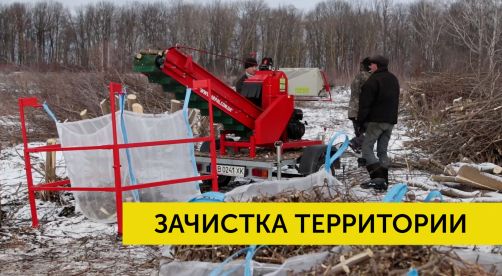
Some models include an output hopper that allows attaching mesh bags for convenient firewood packing. Depending on equipment capacity, the hopper may support one or two bags.
If packing is not required, the hopper can be removed to allow bulk unloading of chopped branches.
For easy movement around the site, many machines are mounted on pneumatic wheels. More powerful professional models are mounted on trailers for towing to the work site.
High-capacity machines may include conveyors that load chopped branches directly into truck bodies, significantly increasing productivity. For transportation and storage, conveyors and input hoppers can often be folded.
Conclusions
Choosing a branch shredder is a responsible process. To make the right decision, it is important to determine what type of material will be processed, how the resulting material will be used, and how often the equipment will operate.
Once these factors are defined, you can choose a suitable model. As you can see, price is far from the most important factor.
ARPAL manufactures wood shredders of all the designs discussed above. The equipment can be purchased directly from the manufacturer in Ukraine.