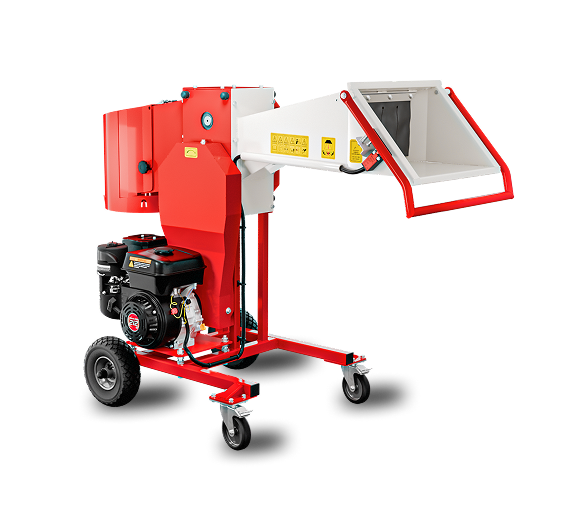
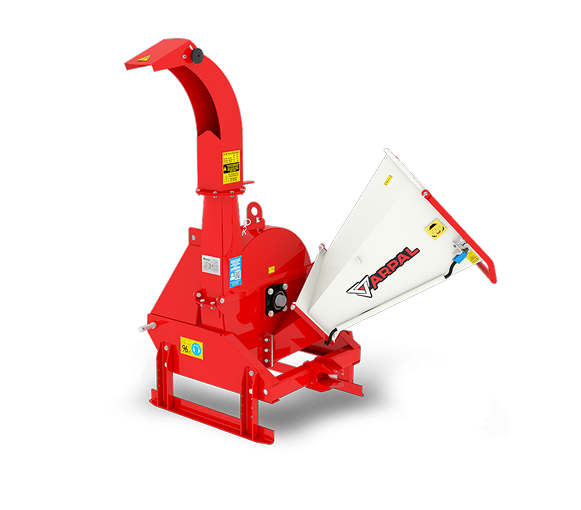
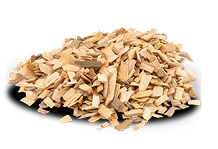
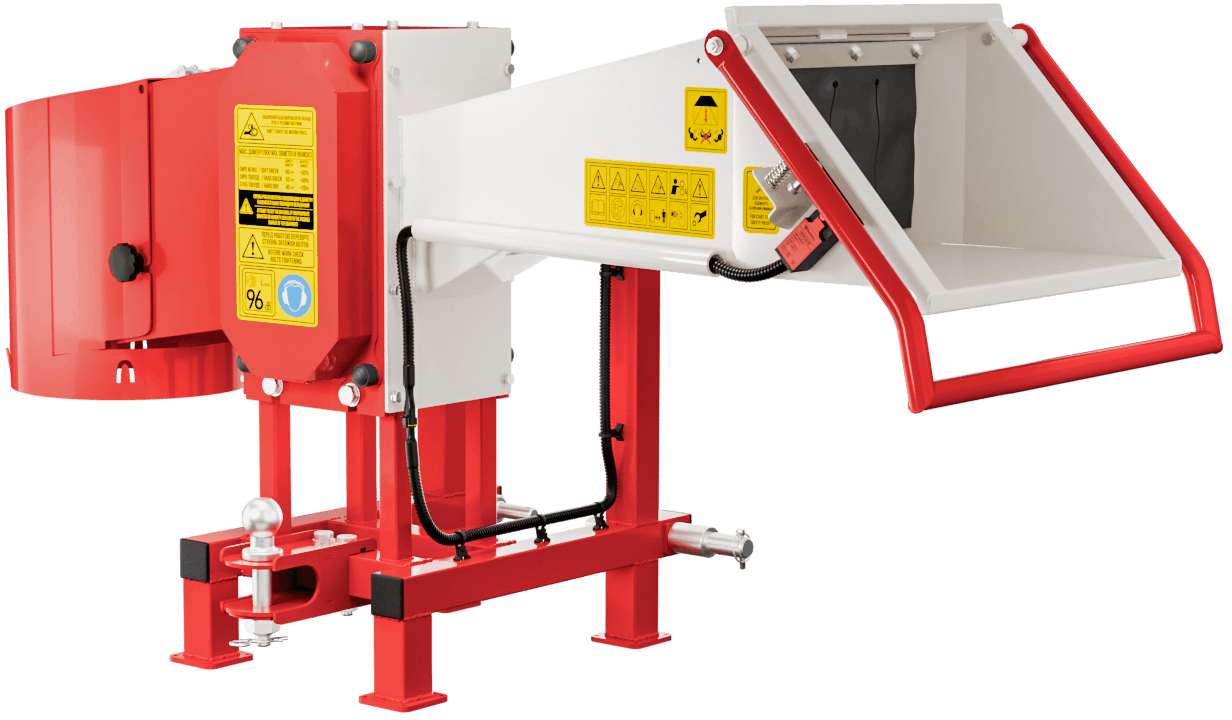
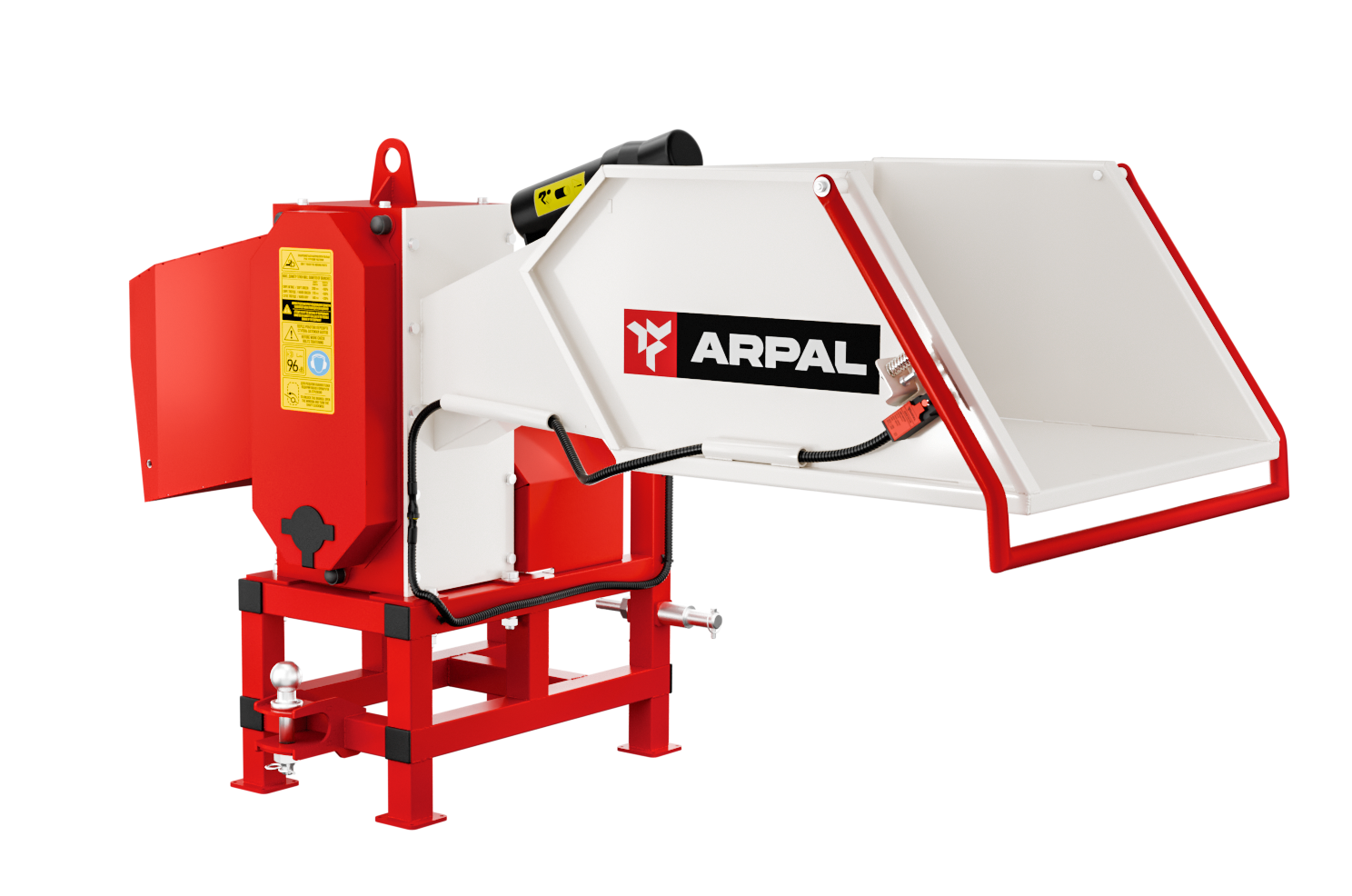
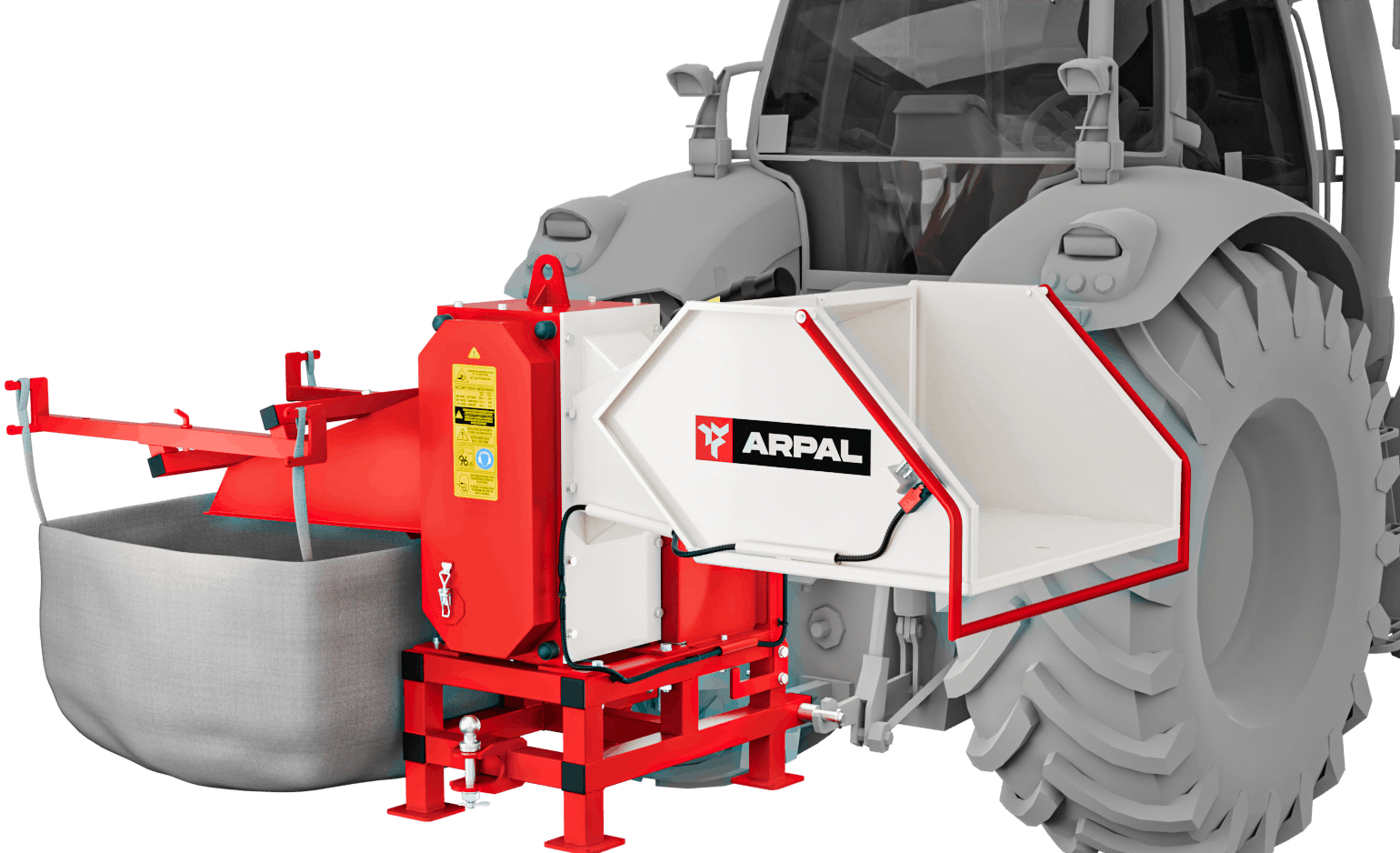
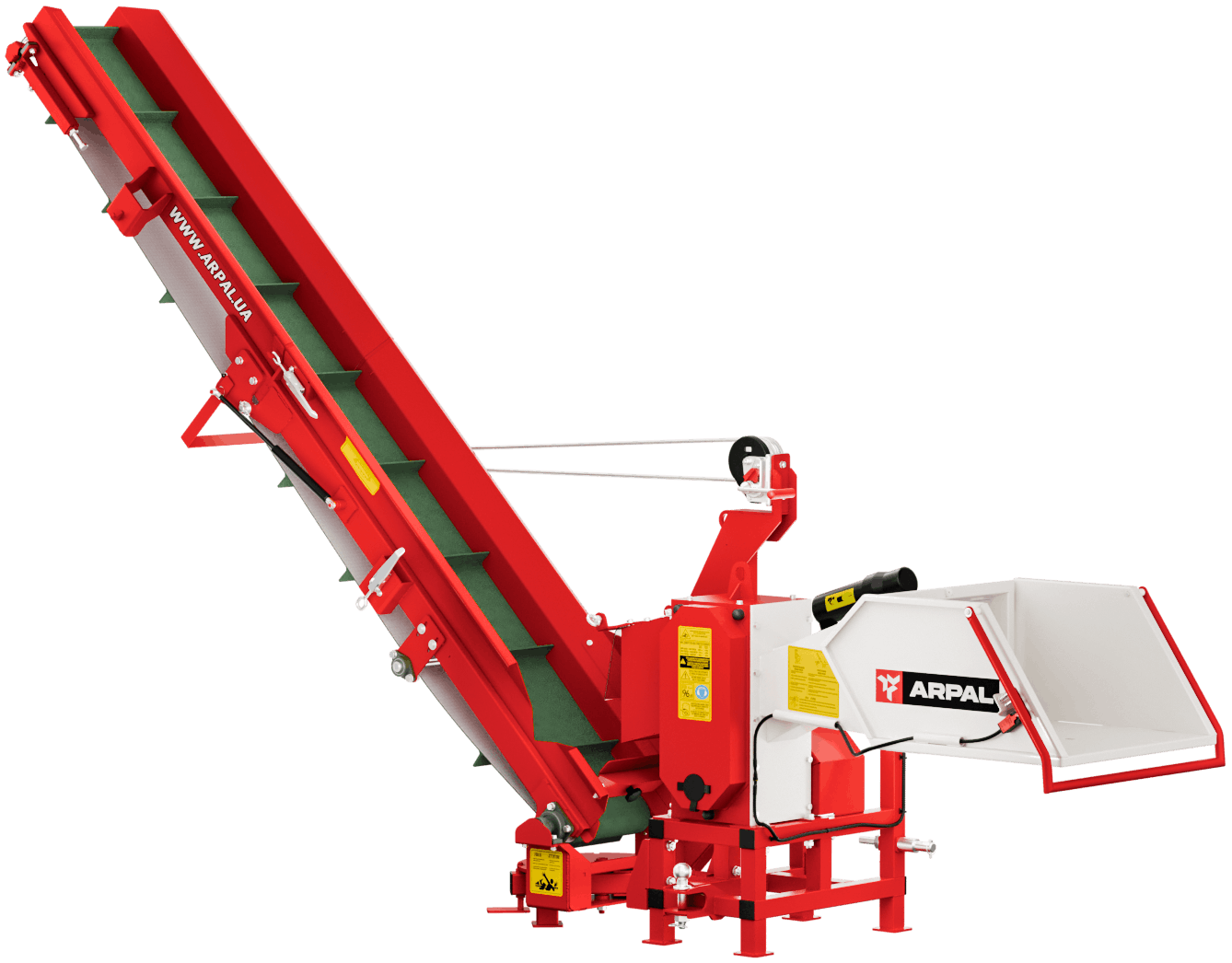
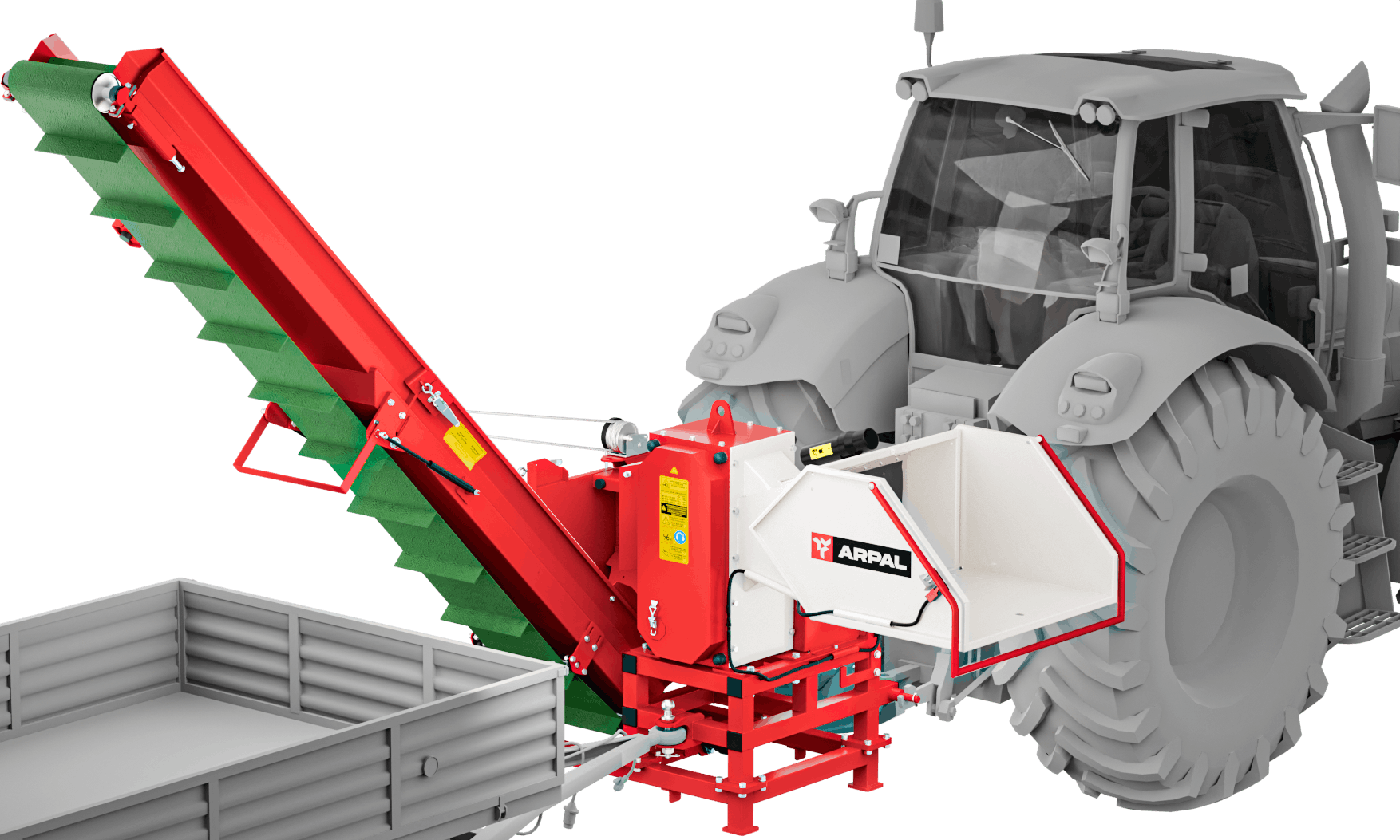
A wood chipper for a tractor is a mounted or trailer-type attachment powered by the tractor’s PTO (power take-off) and designed for fast shredding of branches, trunks, and wood waste directly at the work site. A tractor wood chipper can process 5–15 m³ of raw material per hour, depending on the model and machine power. Such equipment significantly increases productivity in tree and shrub pruning operations. For comparison, one person with a chainsaw can process up to 1 cubic meter of branches per hour. On the ARPAL website, you can buy a tractor wood chipper with a 36-month warranty.
Advantages of ARPAL equipment
The main purpose of this equipment is to increase productivity compared to manual tools. For example, a unit with a 130×165 mm feed opening can process up to 4 cubic meters of branches per hour, which is approximately 2000 kg of raw material. Other advantages include:
- A tractor allows you to move quickly around the site, shredding material directly at the pruning location without transporting it to a processing area. This saves time and effort.
- Thanks to tractor integration, the chipper can be easily transported across the territory, moving directly to areas with accumulated wood waste. There is no need to carry material to one location.
- The machine is powered by the tractor’s PTO. This ensures full autonomy and independence from external energy sources. The tractor engine provides sufficient power for efficient operation.
- The processed material has a uniform size, which is ideal for further use or processing.
For tractor owners, this equipment is an efficient solution for maintaining rural areas or garden plots, minimizing time spent on processing.
Types of equipment
There are several types of tractor wood chippers:
In rotary units, a shaft with mounted blades rotates at speeds of 1000–3000 RPM, grinding the material. These machines are divided into:
- Single-shaft — a simple and reliable design with one rotating blade shaft, suitable for branches up to 50 mm.
- Dual-shaft — two rotors with blades rotate toward each other, grabbing branches from both sides and processing thicker material up to approximately 80 mm.
- Multi-functional — a more complex design with additional chambers for pre-shredding or separating material into fractions, allowing production of chips or mulch of specific sizes.
In disc chippers, branches are fed between rotating steel or carbide discs (up to 1000 RPM) equipped with hardened cutting blades. These models include:
- smooth disc models — simple and affordable but with lower blade durability and higher risk of clogging;
- milling-type models — equipped with grooves and additional elements for better material feeding and increased blade lifespan.
Drum chippers operate using a rotating cylinder with openings, inside which cutting blades shred branches fed through the intake. These units differ by:
- the number of blades inside the drum — usually from 2 to 6, made of wear-resistant materials such as carbide or tungsten;
- the presence of blade reversing systems for even wear and extended service life.
Rotary models are better suited for smaller branches. Disc models handle thicker material. Drum chippers are more versatile but require more careful maintenance of the internal cutting system. This variety of cutting mechanisms allows you to choose the most suitable PTO wood chipper based on required productivity and type of material.
Main differences between models
Tractor wood chippers also differ in:
- engine power — from 20 to 200 HP;
- productivity — from 3 to 20 m³ per hour;
- conveyor functionality — including folding systems;
- hopper capacity for loading branches.
Rotary and disc models may use blades of different shapes — straight, wedge-shaped, serrated, or curved — for more efficient shredding.
Selection recommendations
When choosing a
wood chipper for a tractor, it is important to consider the power of the tractor. It must match the technical requirements of the chipper. For light models, tractors from 20 HP are sufficient. Medium models require 30–70 HP. Professional high-performance chippers are designed for tractors from 100 HP. Otherwise, issues such as overload, blade jamming, or inefficient operation may occur. Processing diameter is also important, as it determines the maximum branch size the machine can handle. Most modern models include additional features for удобна operation:
- adjustable height for optimal feeding
- variable feed speed control
- adjustable discharge direction of processed material
These features expand the machine’s capabilities and allow adaptation to different working conditions. It is also recommended to review feedback and user experiences. Understanding how specific models perform in real conditions increases the chances of selecting the most effective solution. By considering all these characteristics and design features, you can make an informed decision and avoid unnecessary repair costs and downtime.
Price of tractor wood chippers
The price of a tractor wood chipper depends on processing diameter, productivity, and PTO power requirements. Models designed for intensive use have reinforced construction and a longer service life, which affects the price but ensures stable operation without overloads or downtime.
Why choose ARPAL tractor wood chippers
ARPAL is a Ukrainian manufacturer of wood chippers with many years of experience in the industry. The company produces equipment with different performance levels and configurations, allowing you to choose the optimal solution for any task. Advantages of ARPAL equipment:
- High quality. Modern technologies are used in production to ensure reliability and durability during intensive operation.
- Established service support. The company provides fast warranty and post-warranty service, minimizing downtime.
- Competitive pricing. Own production in Ukraine allows offering better prices compared to imported equipment with similar quality.
An ARPAL tractor wood chipper is a reliable solution for systematic wood processing. In-house production, a 36-month warranty, and service support reduce operational risks and ensure stable performance over many seasons.